Go & One: 24/7 UK Monitoring No Long Contracts Free Delivery 30 Day Money Back Guarantee
Personal alarms for older people

Personal Alarms for Elderly People

A monitored personal alarm is a small wearable device that connects an older person straight to a real UK response team at the press of a button — at home or out and about. This page explains how they work, the difference between a watch and a pendant, and how to choose the option that fits the way someone actually lives.
24/7 UK monitoring, 365 days a year
SOS calling with two-way speech
Automatic fall detection included
GPS location for use away from home
MediAlarm 247 personal alarm watch and pendant for older people

What is a personal alarm?

A personal alarm is a wearable device with an emergency button. Pressing it raises an alert with a monitoring centre, where a trained operator answers, speaks to the wearer and arranges help. Ours are worn either on the wrist, as the Go watch, or around the neck, as the One pendant.

The important part is not the button — it is what sits behind it. A monitored alarm connects to our UK team, who hold the wearer's details, health notes, key-holder information and nominated contacts. They can talk the wearer through what to do, call a family member, or send the emergency services with a location.

That is what separates a monitored personal alarm from a simple screech alarm bought off a shelf. A screech alarm relies on someone nearby hearing it. A monitored alarm reaches a team who will act, whatever the time of day.

Who could benefit from a personal alarm?

There is no single profile. These are the situations families most often come to us with.

Living independently at home

Someone who is managing well on their own but would rather not be alone if something happened — a fall in the bathroom, feeling unwell in the night, or a door left unanswered.

After an illness or hospital stay

Confidence often dips during recovery. A personal alarm can be a short-term reassurance while strength and routine return, and can stay in place for as long as it is useful.

Still active and out and about

Walking the dog, gardening, shopping, meeting friends. A mobile GPS alarm covers all of that, rather than only working inside the house.

Families living at a distance

When children or relatives live in another town, an alarm plus the TrueKare app gives everyone a shared way of knowing help is available.

Living alone with health conditions

Where dizziness, mobility difficulties or fainting are a concern, being able to raise help without reaching a phone matters.

Concerns about bathrooms and stairs

Our Go watch and One pendant are IP67 water resistant against everyday rain, splashes and temporary water exposure — reassurance in the places people most worry about being caught out.

How does an elderly personal alarm work, step by step?

1. The wearer presses and holds the SOS button, or the device detects a sudden hard fall. A vibration and beep confirm the alert has started.

2. The device calls our 24/7 UK monitoring team over the mobile network and switches into hands-free mode, so the wearer can speak from wherever they are — standing, sitting or on the floor.

3. An operator answers, identifies the wearer, and sees the device's GPS location along with the notes held on file.

4. The operator decides what is needed with the wearer: reassurance and a check-in call, contacting a family member or neighbour, or calling 999 and passing on the location and medical information.

5. They stay on the line until help is with the wearer, and follow up with nominated contacts afterwards.

There is no need to remember a phone number, find a handset or explain where you are. The device does the calling, and the location travels with the call.

Watch or pendant — which suits better?

Both connect to the same 24/7 UK monitoring team, and both include SOS, fall detection and GPS. The difference is how they are worn.

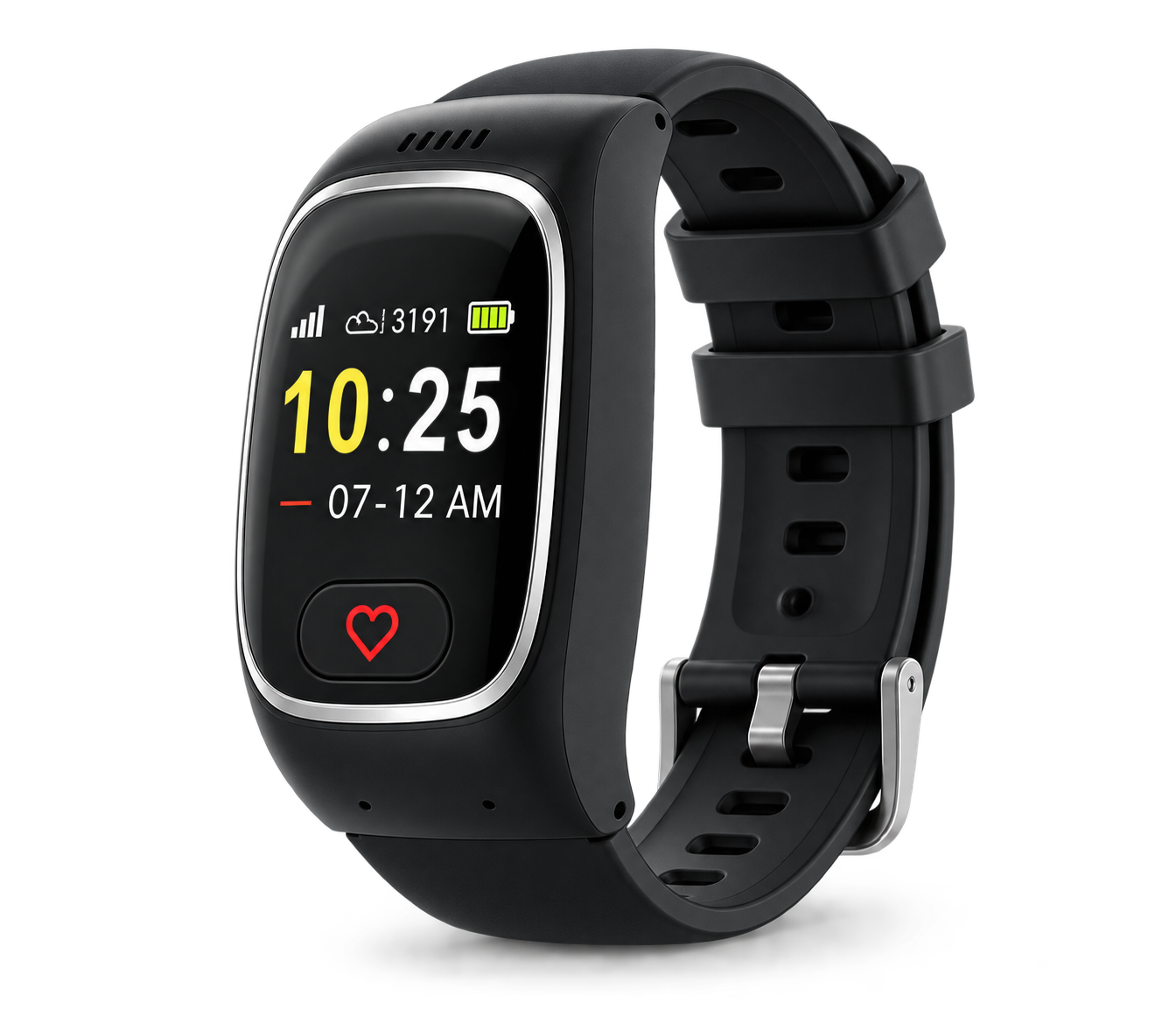
Go personal alarm watch with GPS and fall detection worn on the wrist

Go — personal alarm watch

Best suited to: people who prefer wearing something on their wrist and want a mobile GPS device that also tracks everyday health and wellbeing.

  • One-button SOS with hands-free two-way voice
  • Real-time GPS location shared with our operators
  • Automatic fall detection included
  • Everyday health and wellbeing tracking
  • IP67 water resistant
View the personal alarm watch
One GPS personal alarm pendant worn around the neck

(Pendants may vary)

One — personal alarm pendant

Best suited to: people who prefer a simple dedicated alarm worn around the neck or carried, with nothing extra to learn.

  • Single large SOS button — no phone needed
  • GPS location at home, in the garden and out and about
  • Automatic fall detection included
  • Two-way voice through the pendant
  • IP67 water resistant
View the personal alarm pendant

Home-only alarms versus mobile personal alarms

Traditional alarm systems use a base unit plugged into a phone line at home. They work well inside the property, but protection normally stops at the edge of the signal from that base unit — so a walk to the shops or a trip to see family is not covered.

Mobile personal alarms work differently. The device contains its own SIM and GPS, so it calls our team directly over the mobile network and shares its location wherever the wearer happens to be. Both the Go watch and the One pendant work this way, which is why they also suit people who do not have, or no longer want, a landline.

For most people the practical question is simple: does the person only need cover indoors, or do they want the same reassurance when they leave the house? If it is the second, a mobile GPS alarm is the sensible starting point.

More detail: GPS personal alarms and personal alarms without a landline.

The features that matter most

GPS location

When an alert is raised, the device's location is passed to our operators, so nobody has to describe where they are. Location accuracy can vary with signal, surroundings and buildings. How we locate you.

Fall detection

Sensors look for sudden hard impacts and raise an alert automatically when there is no response. It cannot detect every fall, so the SOS button should still be used where possible. Fall detection alarms explained.

24/7 UK monitoring

Our team answers alerts day and night, all year round, and stays on the line until help arrives. See what happens when SOS is pressed.

No landline required

Both adult devices use mobile connectivity with a SIM included, so there is no phone line to keep and nothing to plug in at home.

What family members should think about

Will it actually be worn? This is the single biggest factor. A device left in a drawer helps nobody, so involve the person in choosing between the wrist and the neck rather than deciding for them.

Charging routine. Both devices need regular charging (the Go watch lasts approximately 3–5 days, depending on usage and settings). Building it into an existing routine works better than relying on memory alone.

Who should be called first? Think about which family members, neighbours or key holders should be on the contact list, and in what order.

Where will it be used? If the person is out and about regularly, mobile GPS matters. If they mostly stay at home, it still matters in the garden and on the doorstep.

Tone of the conversation. Framing an alarm as something that protects independence, rather than a sign of decline, tends to land far better — because that is genuinely what it does.

Cost considerations

With a monitored service you are paying for the 24/7 response team and connectivity, not just the hardware. Our adult plans cover the device, the SIM, the monitoring and the app in a single subscription.

The equipment is supplied for use with the monitoring service and remains the property of Medi Alarm 247 Limited in line with our Terms and Conditions, so the monthly fee is not a purchase price for a device you own.

  • Monthly plan£32.99 per month

    One payment every month.

  • Quarterly plan£89.99 every 3 months

    One payment every three months instead of monthly.

  • Annual plan£299.99 per year

    One yearly payment — best long-term value.

Prices apply to the Go watch and One pendant. Full breakdown on our personal alarm prices page.

How to choose the right alarm

Start with where it will be used, then how it will be worn, then how it will be paid for. Get those three right and the rest follows.

If you would rather talk it through, our UK team will happily walk through the options for the person you have in mind — there is no pressure to order on the call.

Frequently asked questions

How does a personal alarm work?+

The alarm is worn on the wrist or around the neck. When the SOS button is pressed, the device calls our 24/7 UK monitoring team directly and opens a two-way voice conversation, so there is no need to reach a phone. Our operators already hold the wearer's details, medical notes and contact list, and they see the device's GPS location. They then arrange the right response — a family member, a neighbour, or the emergency services.

Which type of alarm is best for an older person?+

It usually comes down to preference. The Go watch suits people who are comfortable wearing something on the wrist and want health and wellbeing tracking alongside SOS. The One pendant suits people who want a single, simple device worn around the neck with nothing else to think about. Both include SOS calling, fall detection, GPS location and 24/7 monitoring.

Does a personal alarm work outside the home?+

Yes. Our Go watch and One pendant use the mobile network rather than a home phone line, so they work wherever there is a mobile signal — in the garden, at the shops, on a walk or while out with family. There is no separate base unit to stay near.

What happens when the alarm button is pressed?+

The device dials our monitoring team and switches to hands-free speech. An operator answers, checks what has happened and stays on the line. Depending on the situation they will call a nominated contact, arrange help, or call 999 and pass on the location and any information held on file.

Do personal alarms detect falls?+

Automatic fall detection is included as standard on our devices. If a sudden hard impact is detected and there is no response, the device raises an alert with our team on the wearer's behalf. No fall detection technology can detect every fall, so pressing the SOS button remains the most reliable way to get help whenever the wearer is able to.

Can family members see what is happening?+

Yes. Family can use the TrueKare app to check the device's location, battery level and alert history, and nominated contacts can be called by our team when an alert is raised.

Not sure which alarm is right?

Tell us a little about the person you have in mind and our UK team will talk you through the options — honestly, and without pressure.

Phone lines open Mon–Fri, 9am–5pm. Go and One: 24/7 monitoring, 365 days a year. Junior: family monitored via the app only.