Go & One: 24/7 UK Monitoring No Long Contracts Free Delivery 30 Day Money Back Guarantee
Fall alarms with automatic detection

Fall Alarms with GPS & 24/7 Monitoring

A fall alarm is a wearable device that can raise help after a fall — either because the wearer presses the SOS button, or because the device detects a sudden hard impact and calls for them. Go and One include automatic fall detection as standard, backed by our 24/7 UK monitoring team.
Automatic fall detection included as standard
SOS button for when you can press it yourself
GPS location sent with every alert
Answered by our UK team, day or night
TrueKare app showing a fall detected alert with the wearer's GPS location

What is a fall alarm?

A fall alarm is a personal alarm with movement sensors built in. Like any monitored personal alarm it has an SOS button that connects the wearer to a response team — but it can also raise that alert on its own if it detects a hard fall and the wearer does not respond.

That matters because the moments after a fall are exactly when pressing a button can be hardest. Someone may be shaken, disoriented, unable to reach a phone, or simply not able to move their arm. Automatic detection is there for those situations.

Ours are wearable rather than fixed to the home: the Go is worn on the wrist, the One is worn around the neck or carried. Both include fall detection, GPS location and two-way speech, and both connect to the same UK monitoring team.

How fall detection works

Sensors, a short check, then a real person — in that order.

1. Sudden impacts recognised

The device looks for the pattern of a sudden, hard impact while filtering out everyday movement such as sitting down heavily, clapping or putting an arm down quickly.

2. A brief check for movement

After a detected impact the device pauses for a few seconds. If it senses normal movement, or the wearer cancels, no call is made. If not, it escalates.

3. Our UK team responds

The device calls our 24/7 monitoring team and switches to hands-free speech. An operator answers, sees the location and notes on file, and arranges the right help.

Automatic detection versus pressing SOS

These two work together rather than replacing one another. Pressing the SOS button is deliberate, immediate and reliable: hold it, and the device calls our team. Automatic fall detection is a safety net for when that is not possible.

We are deliberately careful about how we describe this, because it matters. Automatic fall detection technology cannot guarantee that every fall will be detected — no system on the market can. Slow falls, controlled slides and falls onto soft surfaces are the hardest for any sensor to identify.

Please read: automatic fall detection cannot be relied on as the only way to raise an alert, and cannot detect every fall. If you need assistance and are able to, press and hold the SOS button. Our devices are personal safety devices, not medical or diagnostic equipment.

What happens when a fall is detected

The device vibrates and beeps to show an alert has started, giving the wearer a moment to cancel if all is well.

If it is not cancelled, the device dials our monitoring centre over the mobile network and opens two-way speech, so the wearer can talk from wherever they have landed — no handset to find, nothing to hold.

An operator answers, identifies the wearer and sees the device's GPS position along with the details held on their file: health notes, key-holder access and the order in which contacts should be called.

From there it might be reassurance and a follow-up call, a neighbour or relative sent round, or 999 called with the location and medical information passed straight over. Our operator stays on the line until help is present.

GPS location and 24/7 monitoring

Location travels with the alert

Because the device has GPS and its own SIM, its location goes to our operators with the call. Nobody has to describe a street or a footpath. Accuracy varies with signal and surroundings — more on how we locate you and on GPS personal alarms.

24/7 personal alarm monitoring

Alerts are answered by trained UK operators around the clock, all year. They are the reason a fall alarm is more than a gadget. See what happens when an alert is raised.

Using a fall alarm at home

Bathrooms, stairs and kitchens are where people most often worry. Both devices are IP67 water resistant against everyday rain, splashes and temporary water exposure, so protection does not come off at the times it is needed most.

Using a fall alarm outdoors

There is no base unit to stay near. A fall in the garden, on a pavement or on a country walk can raise an alert anywhere there is a mobile signal.

Wearable fall alarms: watch or pendant

Fall detection is included on both. Choose based on how the wearer prefers to wear it.

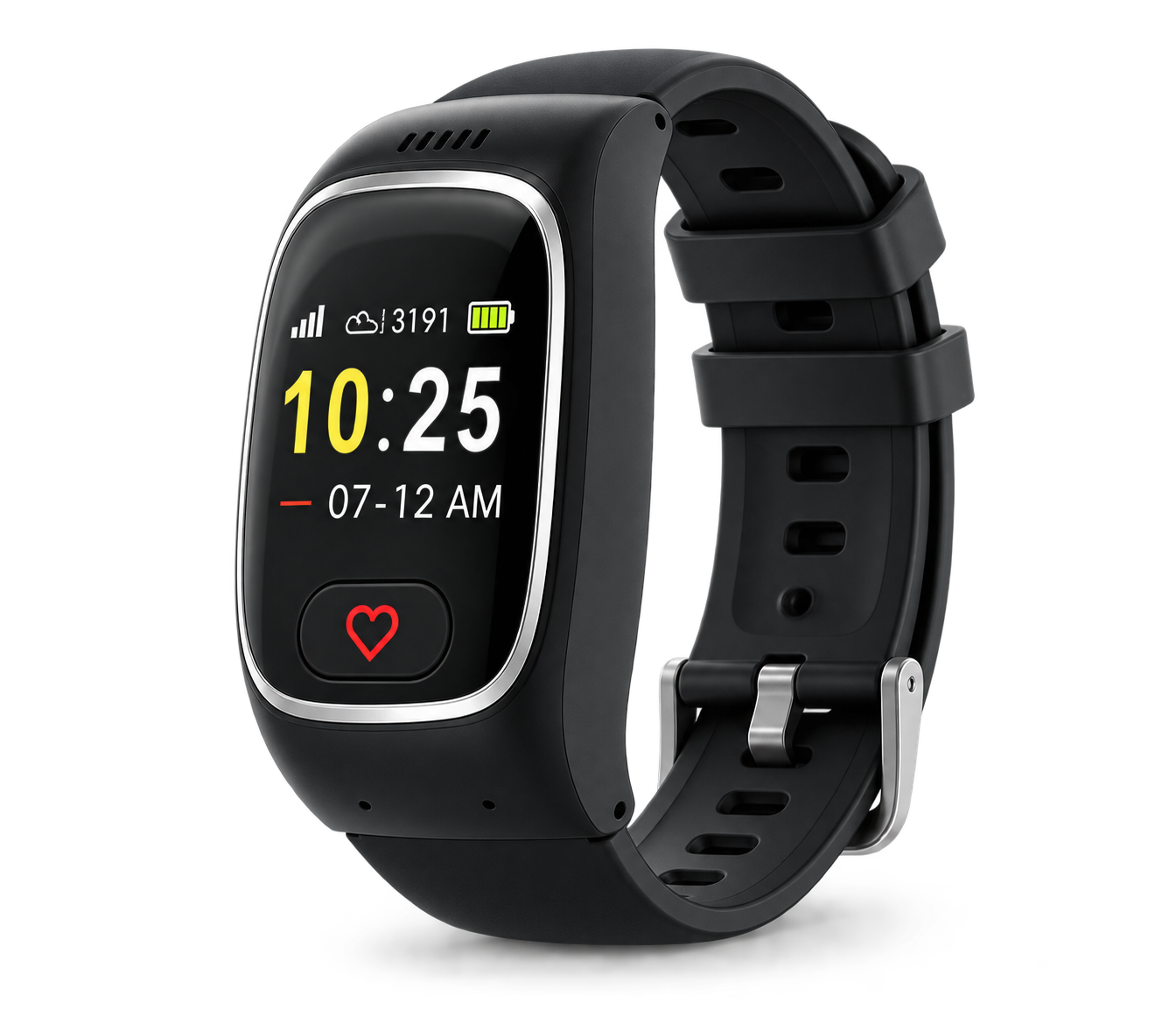
Go personal alarm watch with automatic fall detection

Personal alarm watch with fall detection

Best suited to: people happy wearing something on the wrist who also want health and wellbeing tracking.

  • Automatic fall detection plus press-and-hold SOS
  • Hands-free speech from the wrist
  • Real-time GPS location
  • IP67 water resistant
View the personal alarm watch with fall detection
One GPS pendant with automatic fall detection

(Pendants may vary)

Fall detection pendant

Best suited to: people who want one simple device worn around the neck or carried.

  • Automatic fall detection plus a single large SOS button
  • Two-way voice through the pendant
  • GPS location at home and away
  • IP67 water resistant
View the fall detection pendant

Who a fall alarm tends to suit

Anyone who has had a fall, or who worries about having one. That includes older people living independently, people recovering after surgery or illness, people with balance or mobility difficulties, and people who live alone and would not be found quickly.

It also suits families who want the reassurance that a fall would not go unnoticed for hours — particularly where relatives live some distance away.

If you are choosing on someone else's behalf, our guide to personal alarms for older people walks through the decision, and personal alarm prices explains what the monitoring subscription covers.

Frequently asked questions

Can a fall alarm detect every fall?+

No. Automatic fall detection technology cannot guarantee that every fall will be detected. It is designed to recognise sudden, hard impacts while filtering out ordinary movement, so slower falls — such as gradually slipping from a chair or sliding down a wall — may not be picked up. Where you are able to, pressing the SOS button yourself is always the most reliable way to reach our team.

What happens if a fall is detected?+

The device pauses briefly to check for movement and gives the wearer a chance to cancel. If there is no response, it calls our 24/7 UK monitoring team automatically and opens hands-free speech. An operator answers, sees the device's location and the notes held on file, and arranges the right help — a family member, a key holder or the emergency services.

Can a fall alarm work outside the house?+

Yes. Our Go watch and One pendant use the mobile network rather than a home phone line, so a fall alert can be raised anywhere there is a mobile signal — in the garden, on a walk or while out shopping.

Do fall alarms use GPS?+

Ours do. When a fall alert or SOS call is raised, the device's GPS location is passed to our operators so they can direct help to the right place without the wearer having to describe where they are. Accuracy can vary depending on signal, surroundings and buildings.

Can I still press SOS manually?+

Always, and you should whenever you can. Fall detection is an extra layer for the times you cannot press the button. Pressing and holding the SOS button connects you to our team directly.

Is a fall alarm a medical device?+

No. Our devices are personal safety and monitoring devices. They are not medical or diagnostic equipment, they do not provide clinical assessment, and they are not a substitute for medical advice or emergency care.

Will it go off by accident?+

Fall detection is tuned to ignore everyday movement, and if the device senses movement after an impact it assumes the wearer is fine. If an alert is raised in error, simply tell the operator when they answer — there is no charge and no problem.

Add fall detection to your day, not to your worries

Every MediAlarm 247 device includes automatic fall detection and 24/7 UK monitoring as standard. Our team can help you pick between the watch and the pendant.

Phone lines open Mon–Fri, 9am–5pm. Go and One: 24/7 monitoring, 365 days a year. Junior: family monitored via the app only.