Go & One: 24/7 UK Monitoring No Long Contracts Free Delivery 30 Day Money Back Guarantee
For people who work on their own

Lone Worker Alarms with GPS & SOS

Working alone is normal in a great many jobs — and it is also the situation in which an incident is least likely to be noticed by anyone else. Our wearable safety devices put a monitored SOS button, hands-free speech and GPS location on the wrist or around the neck, answered by a trained operator in our UK monitoring centre at any hour.
One-button SOS to a UK operator, 24/7
Two-way speech through the device
GPS location sent with the alert
4G SIM included — works off site
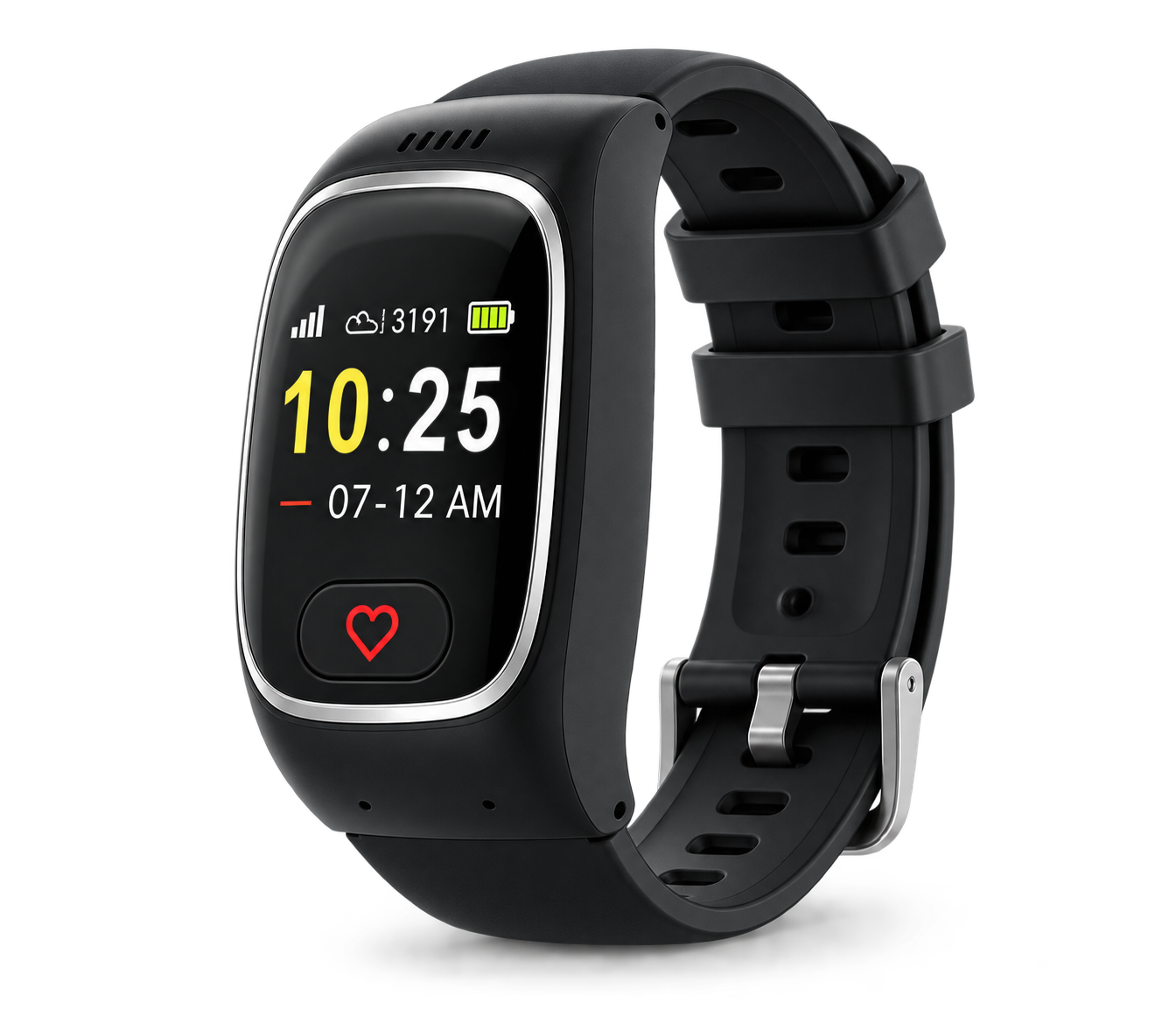
Go GPS safety watch used as a lone worker alarm, with SOS button and 4G connection

Who works alone, and where the risk sits

Lone working covers far more roles than most people assume. Care and support staff visiting homes, cleaners and caretakers, engineers and installers, delivery and transport drivers, estate agents meeting strangers at empty properties, security and site staff, retail workers opening or closing on their own, agricultural and grounds workers, and anyone who covers a shift when the rest of the team has gone home.

The hazards are ordinary rather than exotic: a slip or a fall with nobody nearby, a sudden illness, an aggressive or unpredictable member of the public, a vehicle incident on a quiet road, or simply being somewhere with no one to notice that a person has stopped answering their phone.

In each case the useful question is the same — if something happened in the next ten minutes, how would this person raise help, and who would know where they were? A monitored wearable answers both parts of that question without the worker having to unlock a phone, find a number or explain their location from scratch.

This page describes the safety features of the devices we supply. It is not health and safety advice, and it does not replace your own risk assessment or your duties as an employer. If a specific standard, certification or insurer requirement applies to your organisation, please check it with our team before ordering rather than assuming it is covered.

What the device does in an incident

Genuine features of the Go watch and the One pendant.

Press and hold SOS

The device places the call itself over 4G. No phone to unlock, no app to open and no number to dial while under pressure.

Hands-free two-way speech

The worker can talk to the operator through the device, which matters when hands are occupied, the phone is out of reach or the person cannot get up.

Location with the alert

The operator sees where the device is when the call arrives — useful on an unfamiliar site or a rural road. See GPS personal alarms.

Automatic fall detection

Included as standard, for a collapse or a fall where the button cannot be pressed. Read the honest limits on fall alarms.

Its own 4G SIM

Nothing depends on site Wi-Fi or a phone line — no landline needed.

Built for a working day

IP67 water resistant, so it copes with rain and everyday splashes, and charged with a routine top-up rather than constant attention.

What happens when a lone worker raises an alert

The alert reaches our UK monitoring centre, staffed 24 hours a day, 365 days a year. The operator answers with the wearer's file on screen: their name, the address or details recorded for them, any notes provided, and the escalation contacts in the order agreed with us.

They speak to the worker first. Depending on what they are told — or on what they can hear if the worker cannot speak freely — they will follow the escalation plan: contacting a named manager or on-call number, or requesting the emergency services and passing on the device's location and the notes held on file.

If nobody responds through the device, silence is treated as a reason to escalate rather than to close the call. The operator stays with the alert until it has been handed to someone who can act on it.

We are a monitoring service, not an emergency service. Our operators request assistance on the worker's behalf, but attendance and priority are always decided by the emergency services themselves.

Which format suits the work?

Both devices include SOS, two-way speech, GPS and fall detection — the difference is how they are worn on the job.

Go GPS safety watch worn on the wrist as a lone worker device

Go — adults GPS watch

Best suited to: hands-on and mobile work, where a wrist device stays put and stays reachable.

  • Stays on the wrist through physical work
  • Quick to reach without going into a pocket
  • GPS and fall detection included
  • IP67 water resistant — copes with rain and washing
View the Go watch
One GPS safety pendant with a single large SOS button

(Pendants may vary)

One — GPS pendant

Best suited to: roles where a watch is impractical, or where a discreet button under clothing is preferred.

  • One large button, easy to find without looking
  • Worn on a neck cord or carried in a pocket
  • GPS and fall detection included
  • Two-way speech through the pendant
View the One pendant

Setting it up so it actually gets used

Agree the escalation plan first

Decide who should be called, in what order, and what should happen out of hours. We record that on the file so operators are not improvising during an incident.

Be transparent with staff

Explain what the device does, what a nominated contact can see in the app and what it is for. Devices introduced openly get worn; devices that feel like surveillance do not.

Keep it simple to operate

One press-and-hold action is the whole procedure. Anything more complicated tends to be forgotten in exactly the moment it is needed.

Build charging into the shift

A device with a flat battery protects nobody. Attach charging to the end of a shift or an overnight routine, and check the battery in the app.

What it costs

One monitoring plan covers the device, the 4G SIM and round-the-clock UK monitoring.

Adult plans are priced as below, with a 30-day money-back guarantee if the device is not right. For several devices across a team, speak to our team and we will confirm the arrangement before you order.

The equipment is supplied for use with the monitoring service and remains the property of Medi Alarm 247 Limited, so it is returned when the service ends, in line with our terms and conditions.

  • Monthly plan£32.99 per month — One payment every month.
  • Quarterly plan£89.99 every 3 months — One payment every three months instead of monthly.
  • Annual plan£299.99 per year — One yearly payment — best long-term value.

Full pricing detail: personal alarm costs and prices.

Frequently asked questions

What is a lone worker alarm?+

A wearable safety device that lets someone working on their own raise help without reaching for a phone. Our devices place an SOS call to our 24/7 UK monitoring centre, open hands-free two-way speech so the worker can explain what is happening, and send the device's location with the alert.

Does it work away from the office or site?+

Yes. Each device has its own 4G SIM and GPS built in, so it works wherever there is usable mobile coverage — in a vehicle, on a customer's premises, on a rural visit or walking between jobs. There is no base unit and no fixed range.

Who answers the alert?+

A trained operator in our UK monitoring centre, staffed 24 hours a day, 365 days a year. They speak to the worker, follow the escalation instructions recorded on the file — for example a named manager or on-call contact — and involve the emergency services where the situation calls for it.

Is there automatic fall detection?+

Fall detection is included as standard on both devices, which is relevant for work at height, on uneven ground or where a sudden collapse might otherwise go unnoticed. No fall-detection system identifies every fall, so the SOS button remains the most reliable way to raise an alert.

Can a manager see where the device is?+

Nominated contacts can see the device's location, battery level and alert history in the TrueKare app. We ask that this is set up transparently, with the wearer's knowledge, and that employers explain clearly to staff what is visible and why.

Does it meet a specific lone worker standard or accreditation?+

We do not claim any particular lone worker accreditation for these devices on this page. If your organisation's risk assessment or insurer requires a specific standard or certification, please raise it with our team before ordering so we can confirm honestly whether what we supply meets your requirement.

Can we order more than one device for a team?+

Yes — talk to our UK team about the number of devices and how you would like escalation contacts set up for your organisation, and we will confirm the arrangement before anything is ordered.

Protecting staff who work on their own

Tell us how your people work and we will be straight with you about what these devices do, what they do not, and how monitoring would be set up.

Phone lines open Mon–Fri, 9am–5pm. Go and One: 24/7 monitoring, 365 days a year. Junior: family monitored via the app only.