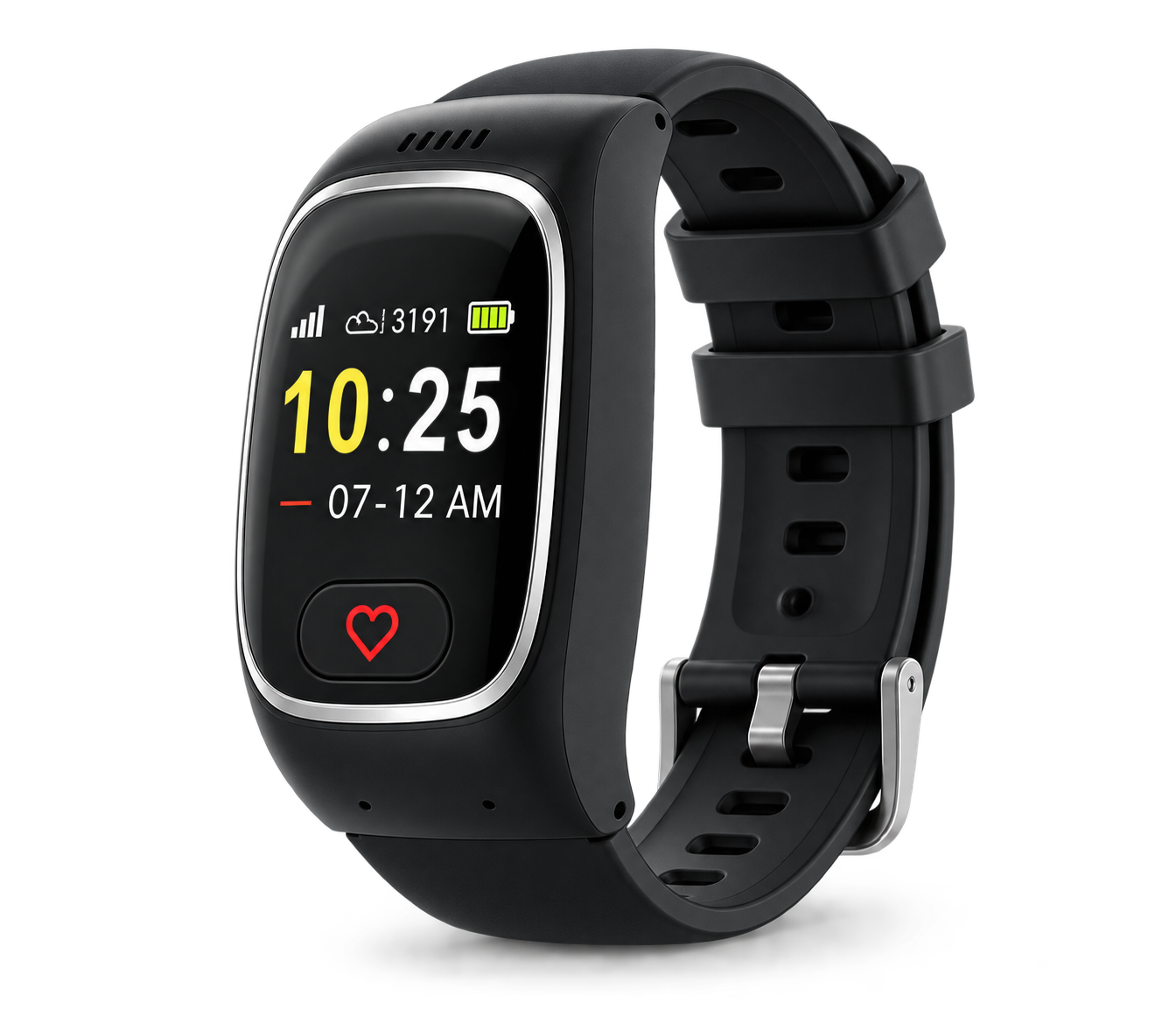
This is the question that matters most when you live alone, so here is the honest answer.
When you press and hold the SOS button — or when fall detection triggers — the device calls our monitoring centre over the mobile network and opens a hands-free voice channel. You do not need to reach a phone, unlock anything or remember a number.
An operator answers with your file already on screen: your name, your address, the health notes you have given us, your nominated contacts in the order you chose, key-holder details and whatever else you have asked us to record. The device's location is shown alongside it.
They speak to you first. If you can tell them what has happened, they act on it. If you cannot answer, they do not simply hang up — they treat the silence as a reason to escalate, working through your contacts and, where the situation calls for it, requesting the emergency services and passing on your address, access details and medical notes.
Once help is arranged, they stay on the line with you rather than leaving you alone with it, and they can let your family know afterwards so you are not left making those calls yourself.
We are a monitoring service, not an emergency service. Our operators contact the emergency services on your behalf when the circumstances warrant it, but ambulance and police attendance is always decided and prioritised by those services — it is not something any personal alarm provider can promise automatically.